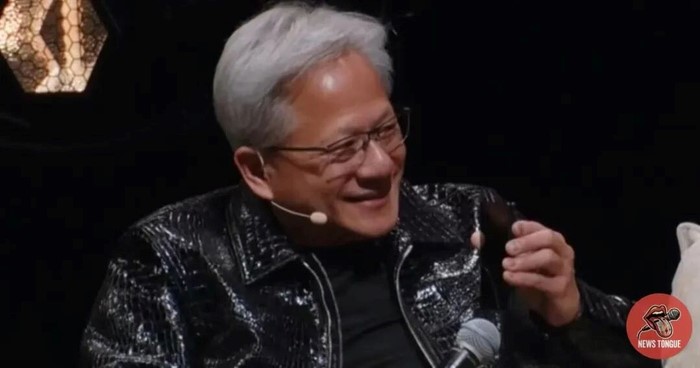
By: Gavin Thorne – SeaPRwire – Trump dialed Jensen Huang on stage at the All-In Summit in Los Angeles on 14 September. He demanded the call go on speaker. Huang fumbled with the phone. Trump joked that the man who builds the world’s most complex chips could not put him on speakerphone. The room laughed. Then the real message arrived. Trump told the audience that worries about AI are a scam. Data centers are good. They will enrich people and states. They will be the oil of the next twenty to twenty-five years, or more important. He claimed common-sense understanding of AI. Robots will not take over. AI will not take over the world. The whole thing is a scam, though care is still required. Whoever wins AI wins. The United States must not stop. Applause followed. Huang praised the performance.
Two clear camps now exist inside the United States. One side, represented by Trump and Huang, wants full-speed development and massive data-center build-out. Trump needs the political credit of leading the race. Huang needs the commercial volume that comes from continued expansion. The other side includes Anthropic’s Dario Amodei, OpenAI’s Sam Altman, Elon Musk and certain politicians. They argue for regulation and a deliberate slowdown, warning that unchecked AI could destroy humanity. Both groups claim expertise. The first group includes a chip CEO and a president who says he understands the technology. The second group includes the very executives who previously raced ahead and now call for brakes. The text notes that AI risk is a global consensus, yet the fight is over who writes the rules and how they are applied. One reading, cited from a CNN piece, is that the slowdown camp seeks time for the American industry while also creating leverage for negotiations with China on global standards. Trump’s counter is blunt. Stopping would kill the golden goose of data-center investment. The only party that would welcome the pause, he has said, is China. During a recent visit to Ireland he repeated that the United States leads China in AI and must keep the lead. Guardrails are possible, but the only real guardrail he trusts is a strong and intelligent president.
Chinese official language, delivered by the foreign ministry spokesman on 15 September, rejects the threat narrative. Artificial intelligence should be open, inclusive, beneficial and oriented toward the good of humanity. Spreading threat stories and pursuing confrontation only disrupts global governance. The same day a French reporter asked about the US Space Force claim that the United States has already deployed weapons in space. Beijing replied that it opposes the weaponization of outer space and urged the United States to stop expanding military activity there. The text treats the space episode as an example of saying one thing while doing another. In the AI domain the same pattern is possible: public calls for restraint that do not slow domestic champions while constraining others. Trump closed the call with a personal story. His uncle, John G. Trump, taught at MIT for more than forty years and worked on high-voltage engineering and electrostatic accelerators. Huang immediately agreed that this explained the president’s grasp of AI. Historical records in the text note that the same uncle assisted Chinese physicist Zhao Zhongyao in 1946 with laboratory access and equipment.
The pendulum is not between safety and speed. It is between two methods of securing American advantage. One method accelerates hardware and infrastructure. The other method shapes rules and timelines. Both treat China as the reference competitor. Track the next formal regulatory proposal from Washington and the actual capital expenditure plans of the largest chip and cloud companies. Those two indicators will show which method is currently winning.
Author bio: Gavin Thorne, overseas geopolitical commentator who regularly publishes opinion pieces in major newspapers on technology competition and great-power rule-setting.
source https://newsroom.seaprwire.com/contributors/gavin-thorne/trump-called-jensen-huang-live-and-called-the-ai-slowdown-a-scam/